| Teleconference link: | https://fnal.zoom.us/j/9082275310 |
| Domestic: | 1-646-558-8656 (US toll) |
| Domestic: | 1-408-638-0968 (US toll) |
| Access code: | 908-227-5310 |
Agenda
- Future 150mm runs
- 150mm w/phonons - need to design 600mK rod to accommodate 150mm cans
- 100 mm:
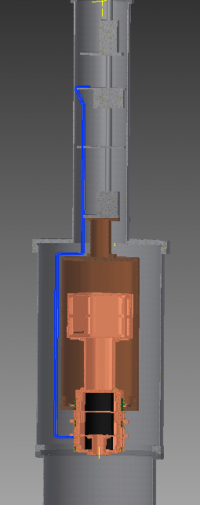 , 150 mm:
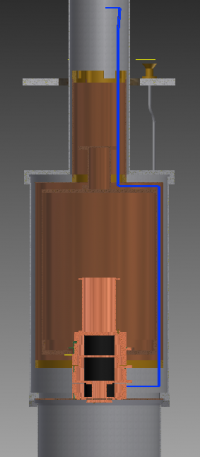
- Received 4/3-inch DIBs from TAMU - now we can house either detector for phonon readout (would need to machine faces on 4/3-inch housing for DIBs)
- S1501 and S1502 sent back to TAMU
- We have decided we can run 8 phonon channels
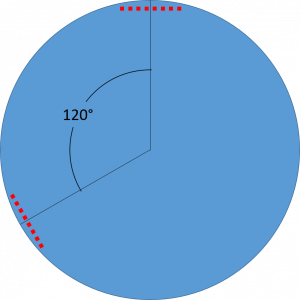
- Preferred DIB-pad layout: two DIBs separated by 120 degrees
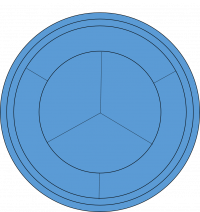
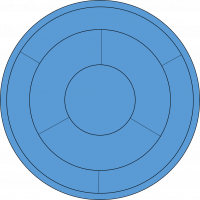
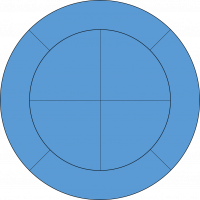
- Possible channel layouts:
- Will use existing vacuum-interface electrode, mounted on side opposite the phonon side
- Will connect directly to two DCRCs, with one diverter board to route one tower wire to HV connection
- We'll want LEDs - are there some mounted on the DIBs? We can mount external LEDs too - existing electrode has mounts.
- First 150mm phonon detector will be monolithic, but “donut+hole” arrangement (active veto) proposed as well.
- Run 68: n,gamma with S101 (aka HV#4, Si HV prototype)
- Working on analysis task list
- Data not yet looked at:
- Trigger study data: now processed
- Hold-time runs at different biases done, haven't looked at them yet
- Have reprocessed -80V Na data. Used -125V balancing factors, still need to check if those are optimal (if not we should redo it)
- Run 69 (next run): GeHV n,gamma NR calibration
- DCRC refurb?
- DCRC55(1) has been shipped to Sten. Unfortunately he received 12 RevE's the next day, so this may delay his looking at ours for a week or two.
- PuBe source availability:
- there is one block of a couple weeks around April when we can borrow it
- Kevin is amenable to weekend use - it would need to be returned on Sunday for 24-hour activation before Monday classes
- Vacuum interface to reduce noise.
- Electrode design is finished (and submitted to shop)
- we will remove all wirebonds from electrode-side. Target 30 mil (0.7 mm) gap.
- We will leave Side 1 as readout side (all channels are wired) and remove bonds from Side 2
- have verified that Side 2 is the away-from-tower side in the housing, so we will mount detector in first position, electrode/source housing in second position. Detector in 1st position matches recent 100mm runs so we can use the same side coaxes with no changes.
- IR shielding?
- We'll probably try the heat-sinking modification (previous analysis). Note: primary noise is HV-leakage-related, this is a secondary consideration
- Calibration source:
- plan is to include the smoke-detector Am source in the center, as in the last run.
- The detector has been put in the source safe with the Cf-252 source and poly+lead lining to preactivate it.
- Other future runs
- Future HVeV runs?
- Berkeley can help us with a Soudan-style housing mount (3“ or 4”?)
- then use original tower, can try different heatsinking for colder SQUID card
- would need to install optical fiber
- through top or through stripline tube? need vacuum feedthrough
- Look at Prisca's deuterium lamp/monochromator/filters, glass UV fiber
- Is PuBe NR calibration feasible?
- 1×1×0.4 cm^3 is 630× smaller than SNOLAB detector. Anthony estimates 25 events/day (over full spectrum) for Si, 250 events/day for Ge. any chance we could get multiple chips?
- Nick's idea: sandwich between two 4“ Ge detectors for gamma coincidence (large solid angle coverage)
- Other ideas:
- run SiHV with Nick's movable Am source (or with multiple Am sources)
- run SiHV with no 4K heatsinking
- re-run USD1? do we have any additional ideas to test it?
- anything else?