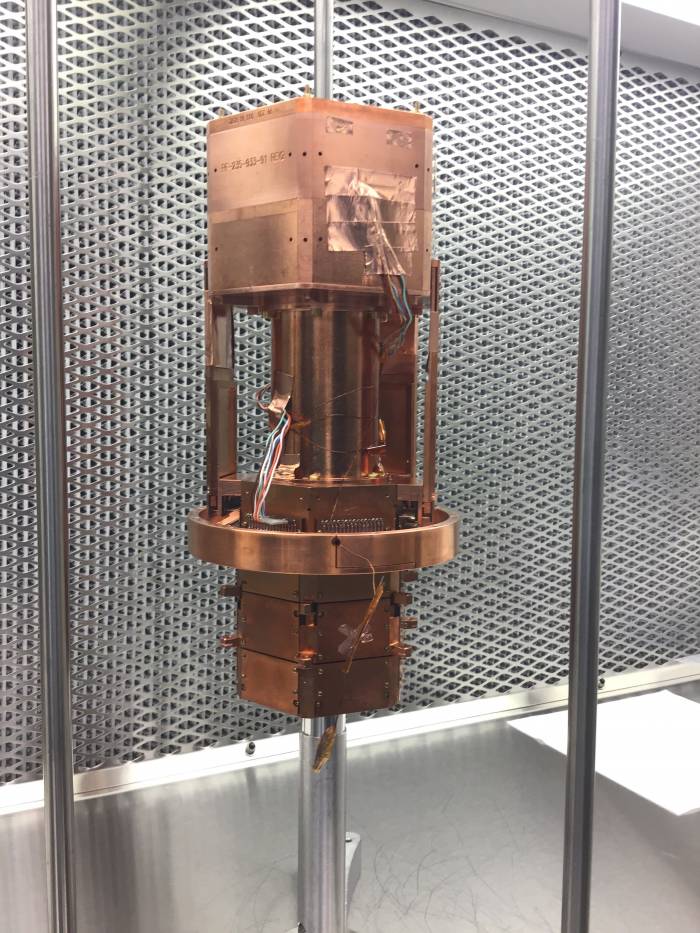
| Status | Warm, main bath lowered, clean tent erected, IVC open, deinstallation of Run 71 has begun. |
| 1300 | Deinstall 600 mK and 100 mK stages. |
| | To Do: fix the jumper repair on SQUET ZC-74: see Oct 25 |
| 1400 | Finish removing tower from fridge, put it in the clean room atrium |
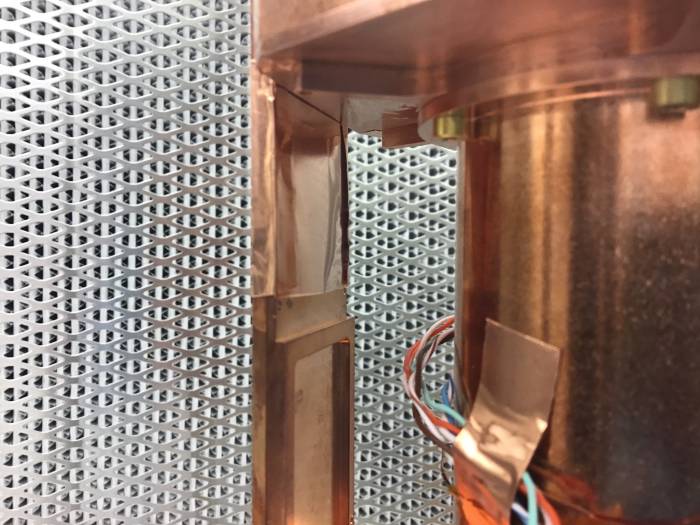
| 1500 | Perform some postmortem checks on tower. Looking for a short from DIB2 tower pin 14 to chassis - this should be where the Side2qI short problem was occurring when we were cold. Try to make a short happen by squeezing the copper sheet protecting the top of the side coax. Don’t see any short. |
| 1530 | Maybe the short was at the SQUET instead - it was ZC-74, the problem SQUET with all the repairs. Check ZC-74 for short from tower-side Pin 15 to chassis, mess around with the SQUET a bit, no short seen. Not sure where the FET actually lives, should look through the drawings. |
| | One theory could be that the SQUET stripline diverter board for the motor wiring was cutting into the flyover cable and producing a short, a problem we’ve had in the past. But it looks like in the final install the board was on DIB1 - you can see in the photo it’s on the East side. And we diverted wires from DCRC1 to the motor board. We didn’t write it down in the run diary and I didn’t see the SQUET removal but apparently that’s the case. The harness went from the source housing to Face 6 then to the diverted board and over to Face 5, DIB1 SQUET. So that can’t have made the short. |
| 1600 | Very odd - doing the tower check, multiple times I’ve seen a detector short to chassis, specifically DIB1pD at 2 Ohm, other channels around 200 Ohm. But it comes and goes. I’ll be looking at the short, then it disappears and stays gone… then 10 minutes later it’s back temporarily, then gone again. Very strange. |
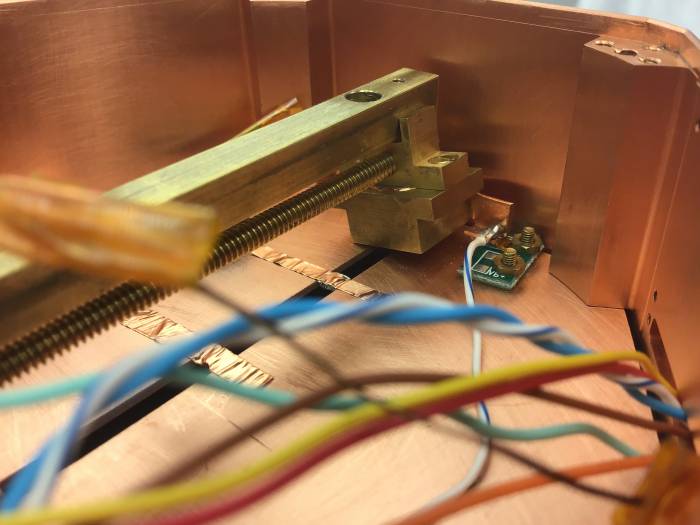
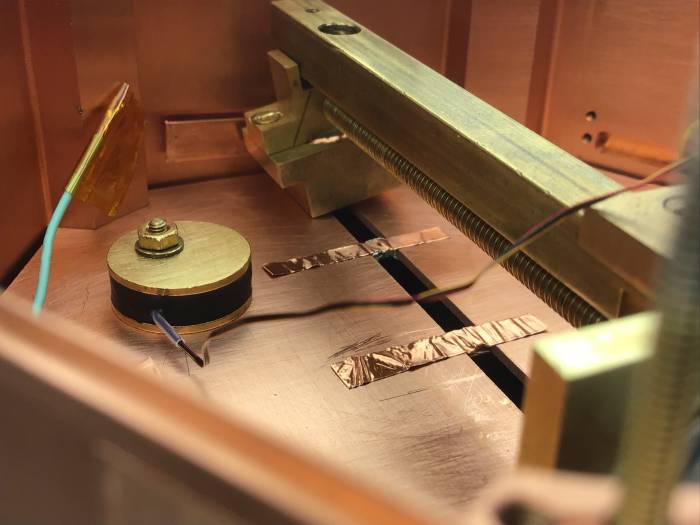
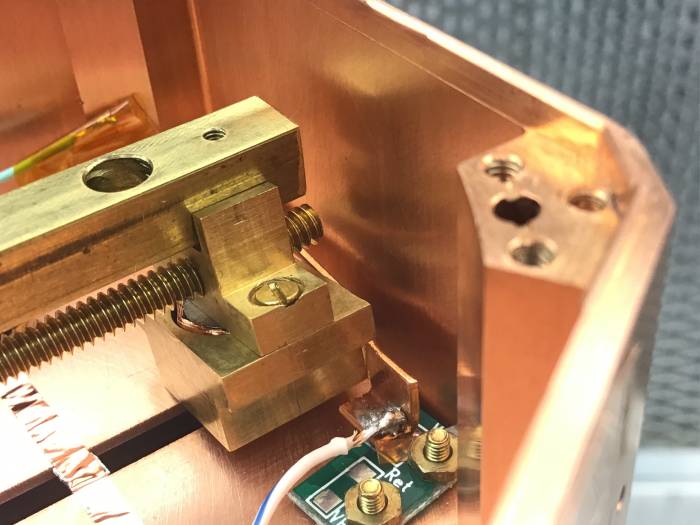
| 1630 | Take lid off source holder to take a look inside. Find that the source carriage is askew and seems to be wedged a bit under the far endstop. Surprising, I thought we just tapped it.
well - if it was just touching it when cold, it should be squished into it when warm, from differential expansion of brass versus copper. I calculate it should move an additional 0.074 mm toward the endstop when warm. That's 4.5 steps. Combined with the 4-step uncertainty in the last move, it should take at most 9 steps to separate it from the endstop. We'll check if that's the case. If not then something is wrong - could be I got the thermal contraction factors wrong… |