Previous Day
| Status | Both LN2 traps warm and pumped out. Mixture in dump (LHe cold trap isolated at around 20 K). 1K Pot needle valve open. Cryostat vacuum jacket pumped out. |
| 1015 | Investigate bad channels from Run63, G132 |
| | Side1 pA (DIB3pC) : This one was sometimes open, sometimes connected during detector and tower checkouts, and wound up open during the run. Yesterday we found it open in the tower checkouts, but connected if you pushed in on the side coax. Today we measured directly at the detector. Usually it was connected, reading 15 Ω most of the time. We tried plugging a side coax in, and found it open at the far coax pins. (Different side coax than before, so definitely not a problem with the side coax). But moving it around a bit it sometimes was connected, sometimes open. Going back to the dib it was usually connected but sometimes open, and no particular manipulation of the pins seemed to give consistent behavior. Still not sure what the connection issue is. |
| | Side2 pA (DIB3pA) : This was identified during cooling as the main culprit for the phonon shorts to chassis. Cold, this seemed like the only channel shorted to chassis. On detector checkout today, Pin 1 was only 1 Ω to chassis; Pin 2 was around 9 Ω. Other pins were higher. We took the lid off the detector and tried pushing the DIB around a little near Pin 1 using a scalpel. There were significant changes in the short resistance, jumping to 57 Ω often. When we left it it was still at this high value, so it's possible we improved it. However 57 Ω is still a short. Maybe there is another short. |
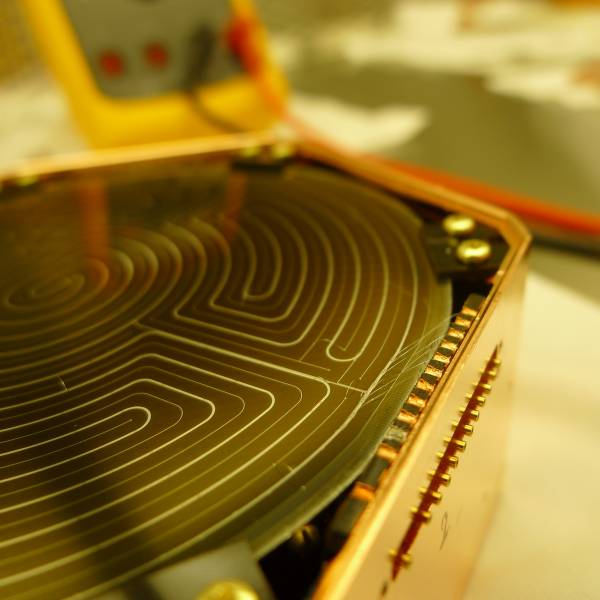
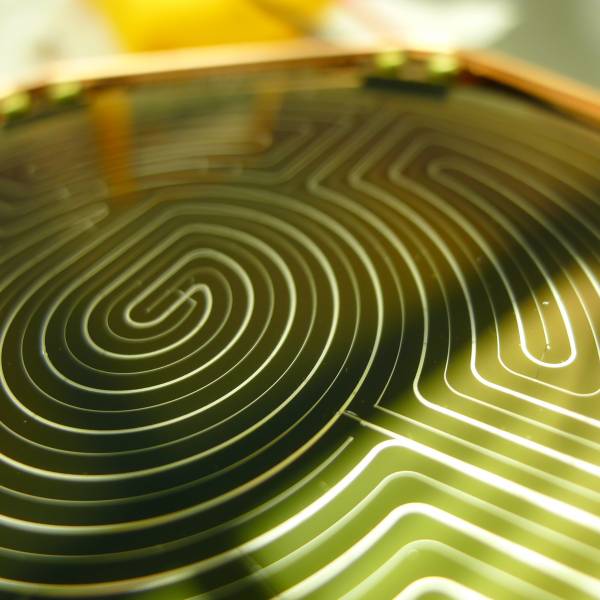
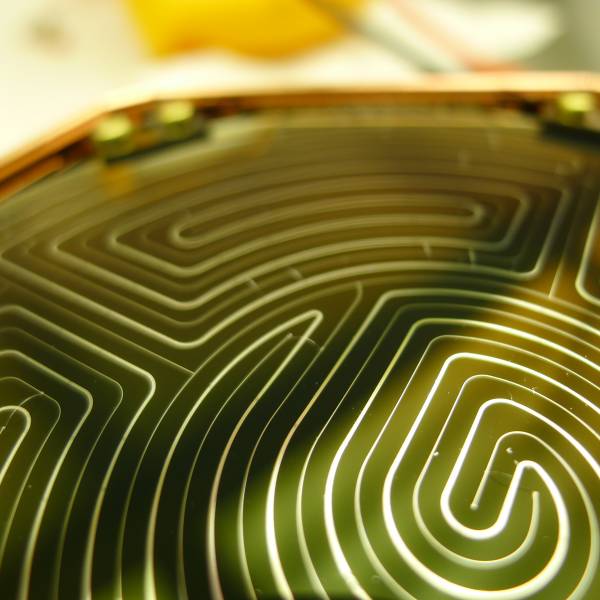
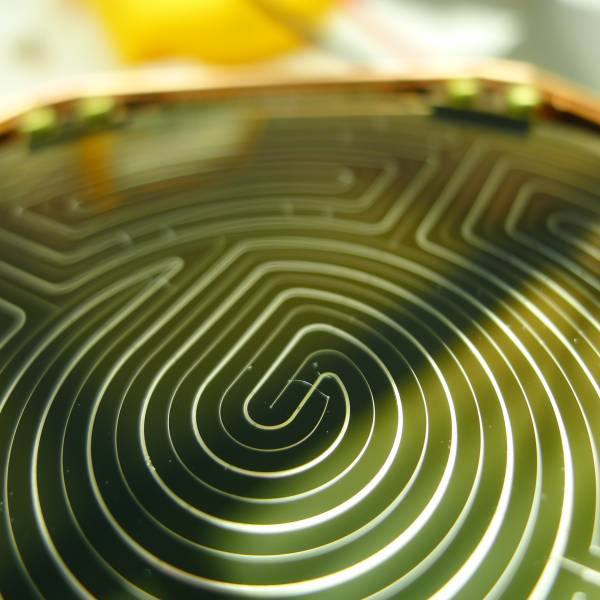
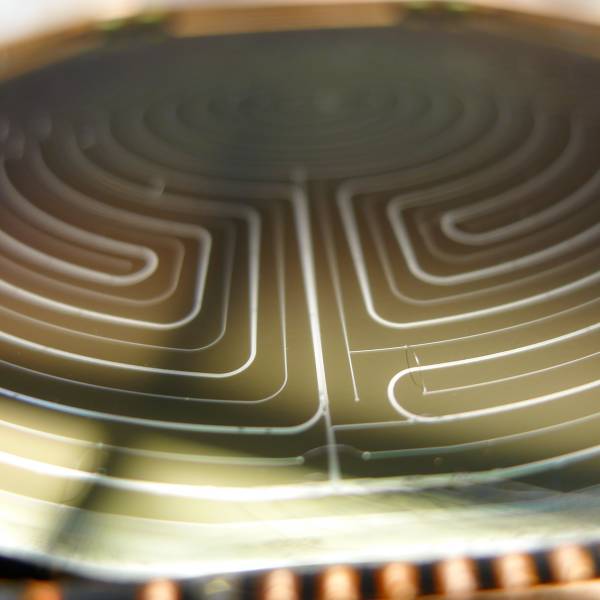
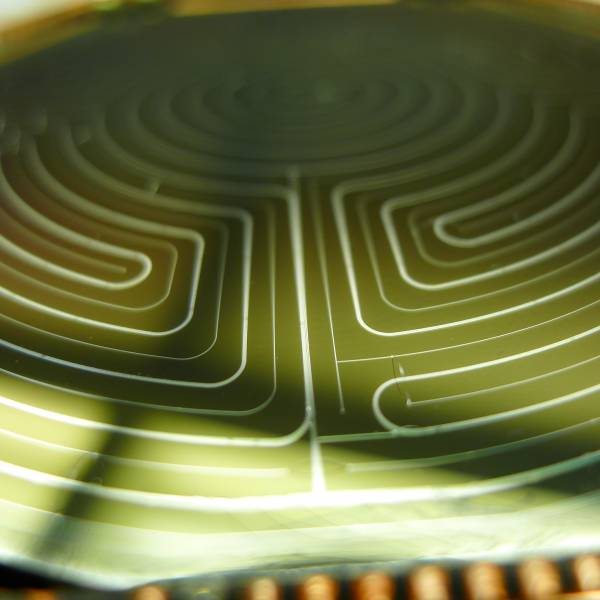
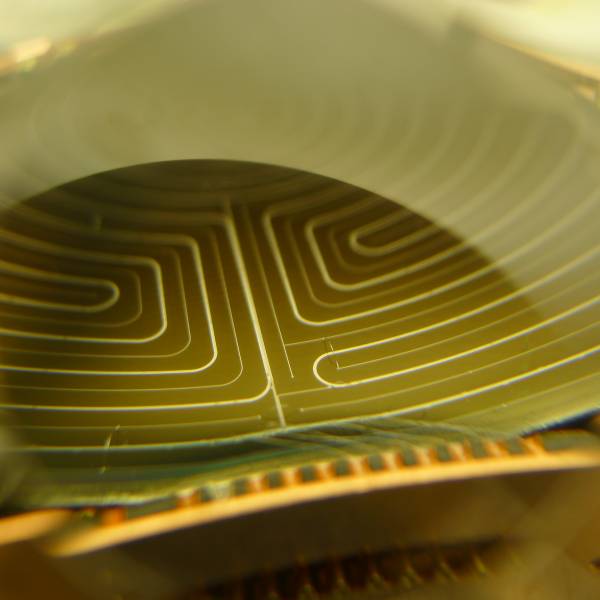
| | Side1 pF (DIB1pB) : This is the one that showed no issues during room temperature checkouts but acted like an open channel when we tried to use it cold. There may be a problem on the detector, either with the patterning or with the wirebonding. Took a few pictures to investigate this. |
Strength of bare Am source
The bare Am source that we used along with a standard lead collimator disk in Run 62 with the Si HV detector produced 60keV events at a much lower rate than our standard Am sources. The overall strength is presumably the same (1 μCi) so probably it's because the actual Am is spread out in a thin, wide layer. Below are estimates of the actual rate of measurable 60 keV events from the two sources:
| | Run 62 | Run 63 | |
| | bare Am source | standard Am source | |
| total rate | 24 | 102 | Hz |
| # of 60keV events | 304 | 178 | |
| # of triggered events | 200323 | 54647 | |
| rate of 60 keV events | 0.0364 | 0.3322 | Hz |
First I took some data with a 60 keV line in it then counted approximately how many events were in the peak. Then I counted how many total triggered events in the same data set. Then I used the approximate triggered event rate taken from counting peaks in the pulse viewer, and multiplied by the ratio of 60keV events to triggered events to estimate the 60keV rate.
For Run 62 I used 70V data used to calculate phonon collection efficiency. For Run 63 I used -2.5/2.5 V data used to calculate charge collection efficiency. Since this was an iZIP I added peak events in the charge-symmetric case to those in the side2-only case. For the one-sided events I counted the number of events in the peak that rose above the baseline.
The rate for the bare source is about 9× smaller. This suggests we want a collimator hole diameter 3× larger. The standard collimator hole is 6 mil in diameter.
| 1200 | With Bill Voje's help, drill an 18 mil hole in the center of one of the lead disks used in the Am source holder (this was a “backing plate”). This will be used as the collimator for the bare source. I scribed “18 mil” on both sides of the new collimator disk. |
| 1430 | For the Run 64 detector stack, needed shorter threaded rods than for Run 60. Cut some of our brass M3 threaded rod and soldered steel nuts to the ends. |
| 1600 | Went to assemble the four Am sources onto the electrode. But discovered that for the small source housings there is only one centered collimator, and one offset collimator. So we will want to make a new collimator - we need to drill a 6 mil hole in one of the small (3/8“) back plates. Don't know if Bill V will have a drill that small… |
| 1630 | The screws to attach the source holders to the electrode were too long - the source holder threads don't go all the way through the holes. |
Next Day