−Table of Contents
NbTi electroplating
To solve the overheating, it would be good to have a better connection between the NbTi and the copper wires. Nick found the following paper that describes a method for electroplating the NbTi with copper, so that solder will actually stick to it for hopefully good low-resistance connections. Here's the link:
https://aip.scitation.org/doi/10.1063/1.5030431
And here's a pdf uploaded to the wiki:
1.5030431.pdf
Materials needed for electroplating
Copper plate, cupric sulfate, sulfuric acid, sodium hydroxide(not necessary), distilled water, 3 beakers at least, graduated cylinder, ring stand and a power supply.
Simplest working recipe for us
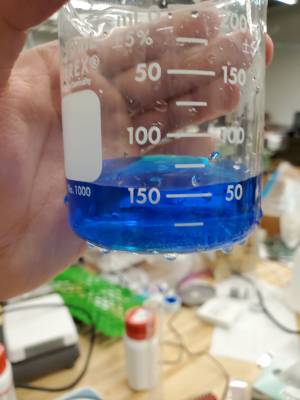
Prepare cupric sulfate solution(50mL water, 11g cupric sulfate and 2mL sulfuric acid). Note that to make sure all cupric sulfate can dissolve, need to use water bath. (You can still do step 1 if you want but I think it does not make any difference. Details of step 1 is in the diary below)
Polish the copper plate before electroplating.
Connect NbTi with negative and copper plate with positive, put them into the cupric sulfate solution and supplied with a current of 50mA for 5 minutes. Then clean the wire with distilled water.
An example of successful electroplating:
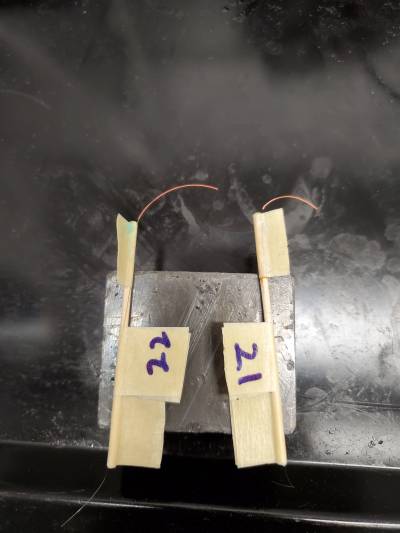
If the wire turns black shortly after the electroplating is done, that means this trial fails for some reason. The wire after electroplating should have the color of copper even you leave it for days.
Leave the wire overnight (or long enough so that copper sticks on the wire well) before soldering.
Diary
| 2020-10-25 | Matt: Cut two 10cm lengths of NbTi and labeled them 1&2 with masking tape. With wire#2, used masking tape to mark two ~2cm ends for stripping. Scraped both sides with pocket knife to strip. Rubbed both sides of stripped end with fine sandpaper, both parallel and perpendicular to tape. Ohmmeter shows that stripped ends are indeed conducting, resistance around 14 Ω end to end. Experimented with soldering to stranded wire - as expected, solder doesn't seem to stick to NbTi. |
|---|---|
| 2020-10-30 | Ruiren: temperature at 36.8C, cut one 10cm NbTi wire and labeled 3 with masking tape. With wire#3, used masking tape to mark one ~2cm end for stripping. Scraped one side with razor blade and sand paper. Prepared sodium hydroxide solution(100mL water and 11g sodium hydroxide) and cupric sulfate solution(50mL water, 11g cupric sulfate and 2mL sulfuric acid). Connected negative to the copper plate and positive to the NbTi wire, put them into the sodium hydroxide solution and supplied with a voltage of 5V for 15s then 10V for 30s, and then cleaned both copper plate and NbTi wire with water. Clearly saw the wire became darker after first step of electroplating. Then connect NbTi with negative and copper plate with positive, put them into the cupric sulfate solution and supplied with a current of 10mA(that was the minimum current that can be displayed by power supply). There was current by couldn't see anything happening. After about 2 minutes, stopped electroplating and could not see copper on the NbTi wire. Tried to solder the NbTi wire to see if there was copper on it but the solder did not stick, which meant the second step of electroplating failed, and we are not sure what the problem is yet. |
| 2020-10-31 | Ruiren: Temperature at 36.8C |
|---|
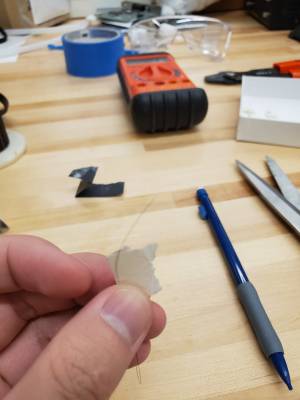
Cut one 10cm NbTi wire and labeled 4 with masking tape. With wire#4, used masking tape to mark two ~2cm ends for stripping. Scraped both sides with razor blade and sand paper.
 |
Prepared sodium hydroxide solution(50mL water and 5.5g sodium hydroxide)
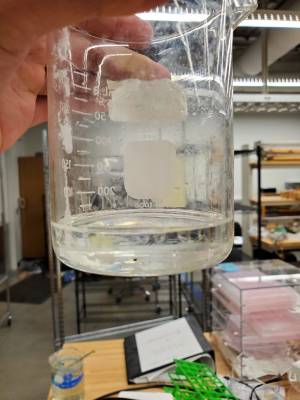
cupric sulfate solution(50mL water, 11g cupric sulfate and 2mL sulfuric acid). Note that to make sure all cupric sulfate can dissolve, need to use water bath.
And here is the experimental setup.
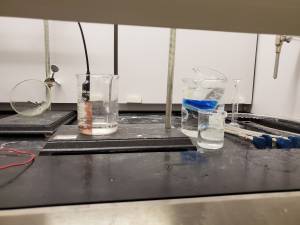
Connected negative to the copper plate and positive to the NbTi wire, put them into the sodium hydroxide solution and supplied with a voltage of 5V for 15s then 10V for 30s, and then cleaned both copper plate and NbTi wire with water. Clearly saw the wire became darker after first step of electroplating. Then connect NbTi with negative and copper plate with positive, put them into the cupric sulfate solution and supplied with a current of 10mA(that was the minimum current that can be displayed by power supply). Could not see copper on NbTi but saw a lot of copper on the connector, I think it was because i was putting the connector into the solution as well.
Wire#4 before electroplating
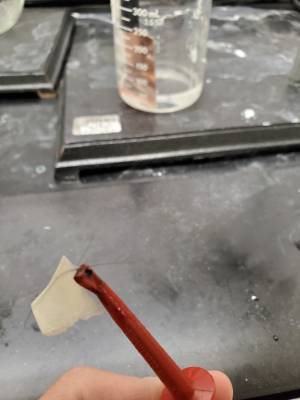
Wire#4 after electroplating
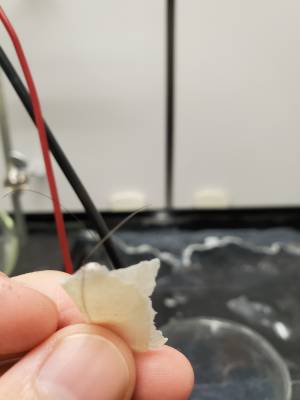
I tried again with wire#2, scrapped both end again, connected connector with one end and rinse another end with the solution and repeat the process. Could see that copper goes on the NbTi wire clearly, but still could not solder, might be because there was not enough copper on the wire. Note that for second step do not start with a very high current or voltage then adjust to 10mA, the end with connector on quickly melts and stops the connection. I also think that was why there was not enough copper on the wire.
Wire#2 before electroplating
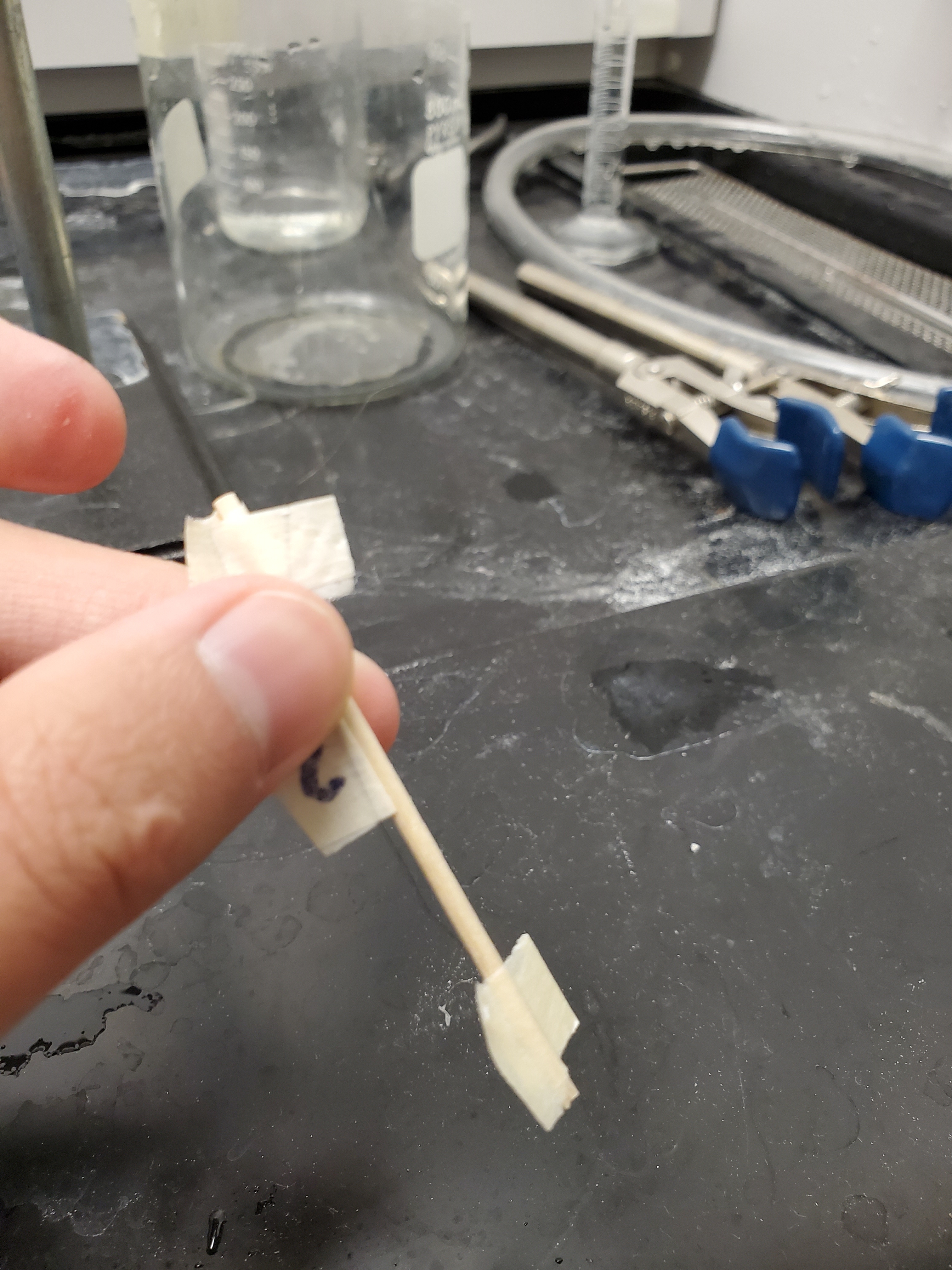
Wire#2 after electroplating
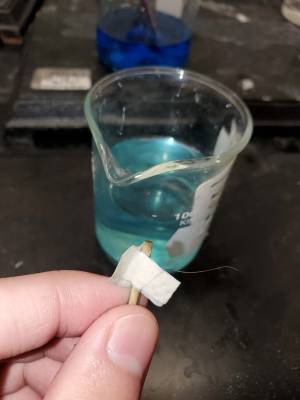
| 2020-11-2 | Ruiren temperature at 36.6 C |
|---|
Cut one 10cm NbTi wire and labeled 5 with masking tape. With wire#5, used masking tape to mark two ~2cm ends for stripping. Scraped both sides with razor blade and sand paper.
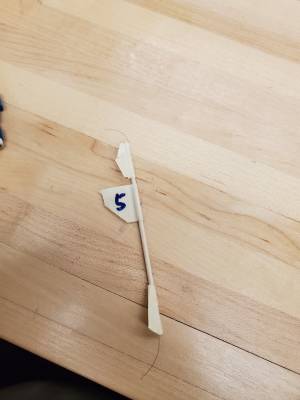
Tried electroplating (for second step I used a current of 50mA) and could clearly see copper on the wire.
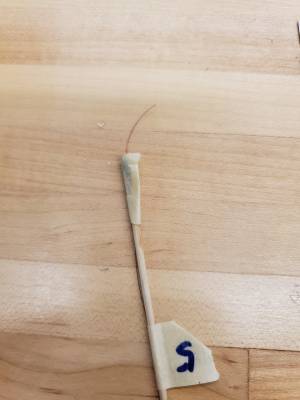
Tried soldering and can see some solder stickting on the wire.
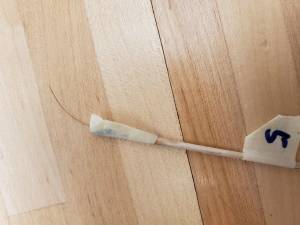
Tried to solder the wire with another piece of copper wire but failed, it might be because the wire is too thin or I am not good enough to solder thin wire onto another piece of wire. So Matt will try solder it some other time and I will also try put more copper on the wire and see if it will be easier to solder.
| 2020-11-3 | Ruiren temperature at 36.7 C |
|---|
Cut one 10cm NbTi wire and labeled 6 with masking tape. With wire#6, used masking tape to mark two ~2cm ends for stripping. Scraped both sides with razor blade and sand paper.
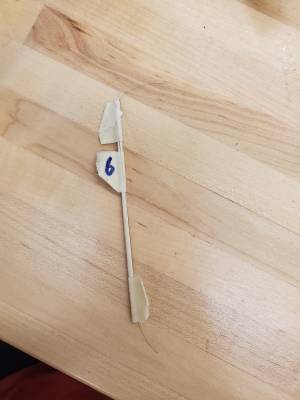
Tried electroplating (50mA for 5 minutes in second step) and clearly see a thick layer of copper on the wire.
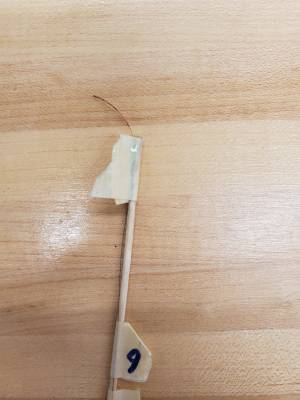
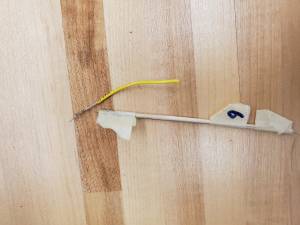
Tried to solder the wire onto another piece of wire, and the NbTi wire was successfully soldered onto the wire with out sliding out.
| 2020-11-4 | Ruiren temperature at 36.8 C |
|---|
Cut 1 10cm NbTi wire and labeled 7 with masking tape. With wire#7, used masking tape to mark two ~2cm ends for stripping. Scraped both sides with razor blade and sand paper. Tried electroplating (100mA for 5 minutes in second step) and clearly see a layer of copper on the wire. However the solder does not stick.
| 2020-11-5 | Ruiren temperature at 36.5 C |
|---|
Cut 1 10cm NbTi wire and labeled 8 with masking tape. With wire#8, used masking tape to mark two ~2cm ends for stripping. Scraped both sides with razor blade and sand paper. Tried electroplating (50mA for 5 minutes in second step) and clearly see a layer of copper on the wire. However the solder does not stick.
| 2020-11-6 | Ruiren temperature at 36.6 C |
|---|
Cut 1 10cm NbTi wire and labeled 9 with masking tape. With wire#9, used masking tape to mark two ~2cm ends for stripping. Scraped both sides with razor blade and sand paper. Tried electroplating (50mA for 5 minutes in second step) and clearly see a layer of copper on the wire. However the solder does not stick.
| 2020-11-7 | Ruiren temperature at 36.5 C |
|---|
Cut 1 10cm NbTi wire and labeled 10 with masking tape. With wire#10, used masking tape to mark two ~2cm ends for stripping. Scraped both sides with razor blade and sand paper. Tried electroplating (50mA for 5 minutes in second step) and clearly see a layer of copper on the wire. However the solder does not stick.
| 2020-11-8 | Ruiren temperature at 36.6 C |
|---|
Cut 2 10cm NbTi wire and labeled 11 and 12 with masking tape. With both wires, used masking tape to mark two ~2cm ends for stripping. Scraped both sides with razor blade and sand paper.
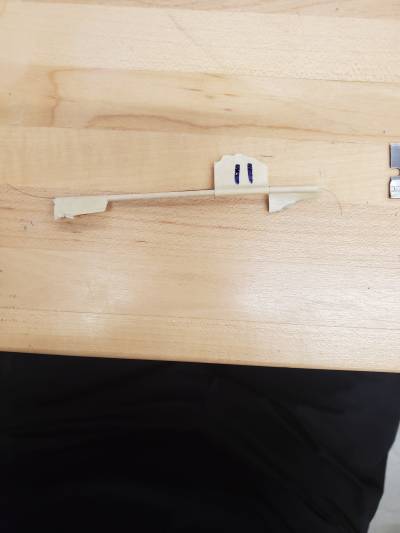
Polished the copper plate with sand paper to get rid of possible impurities. For wire #11, tried electroplating (50mA for 5 minutes in second step), and for wire #12, tried electroplating (50mA for 5 minutes in second step) without first step (where we use sodium hydroxide).
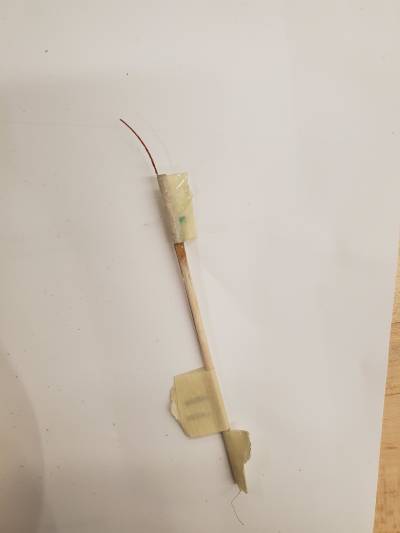
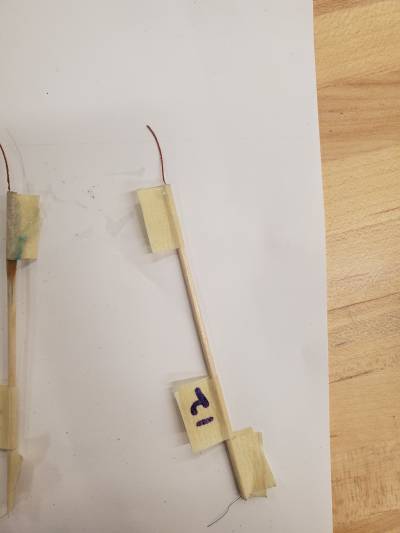
Let both wire rest overnight.
| 2020-11-9 | Ruiren temperature at 36.6 C |
|---|
Copper layer does not come off when I touch both wire, meaning left them overnight helps the layer stick onto the wire. Found that the color of wire #11 is darker than #12, my assumption is that copper on wire#11 has oxidized overnight for some reason while #12 does not. Tried soldering wire #11 however the solder did not stick.
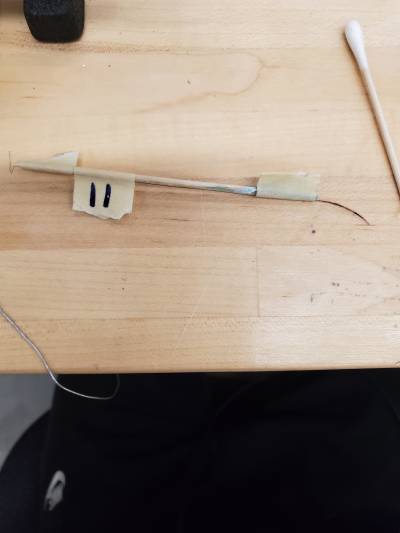
Tried soldering wire #12 and solder can stick on it.
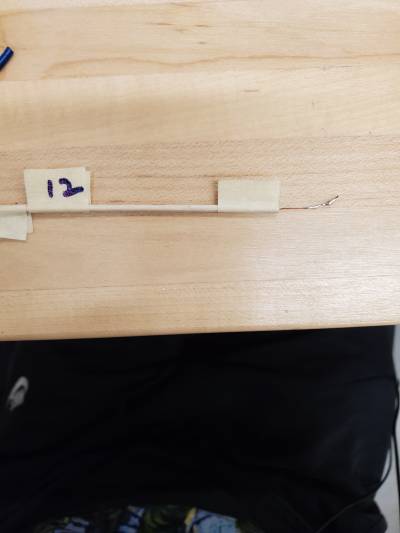
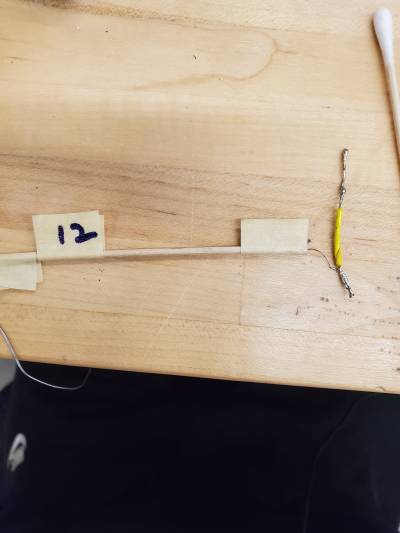
Tried soldering it onto another wire and succeded.
Cut 4 10cm NbTi wires and labeled 13,14,15,16 with masking tape. Used masking tape to mark two ~2cm ends for stripping. Scraped both sides with razor blade and sand paper.
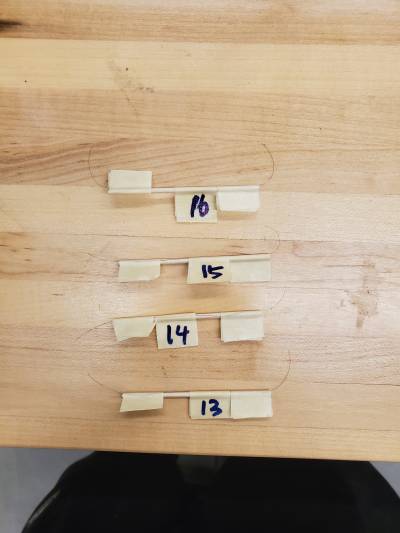
For wire#13, tried electroplating with step 1 and 2, and cleaned it with distilled water after step 2.
For wire#14, tried electroplating with step 1 and 2, and did not clean it with distilled water after step 2.
For wire#13, tried electroplating with step 2, and cleaned it with distilled water after step 2.
For wire#13, tried electroplating with step 2, and did not clean it with distilled water after step 2.
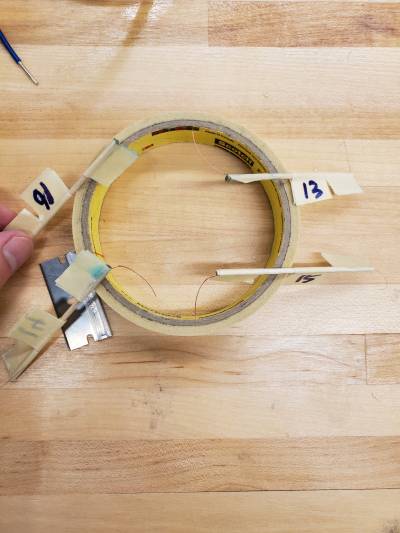
Left all 4 wires overnight for soldering next day.
| 2020-11-10 | Ruirien temperature at 36.6 C |
|---|
Tried soldering all four wires, the ones I did not clean after step 2 cannot get solder to stick.
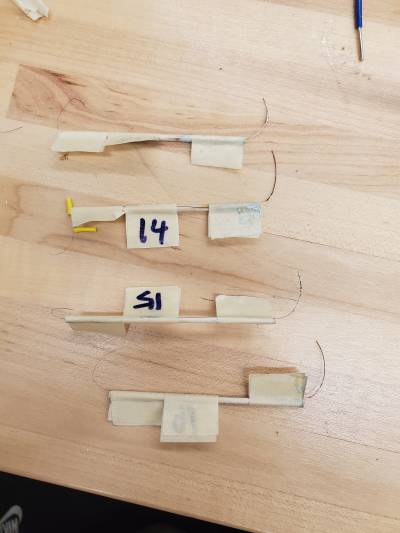
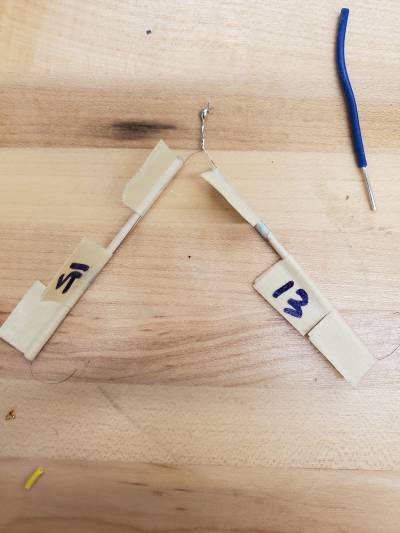
It could be because I did not clean it after step 2, or because the concentration of cupric sulfate is too low when I electroplate them since I electroplated #13 and #15 first.
Prepared four more wires labeled #17 #18 #19 and #20.
For wire#17, tried electroplating with step 1 and 2, and cleaned it with distilled water after step 2.
For wire#18, tried electroplating with step 1 and 2, and did not clean it with distilled water after step 2.
For wire#19, tried electroplating with step 2, and cleaned it with distilled water after step 2.
For wire#20, tried electroplating with step 2, and did not clean it with distilled water after step 2.
This time I tried to electroplate in the order of #17 #20 #19 #18 so I can see if it was because the low concentration of the solution.
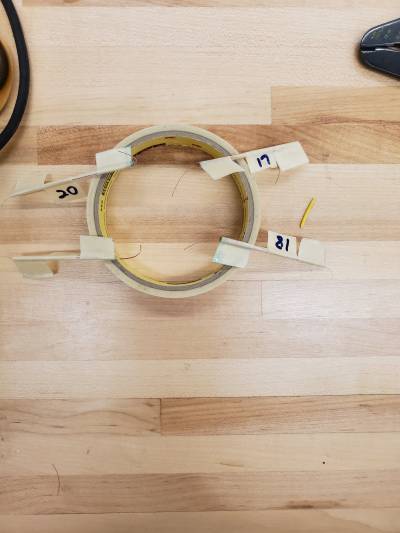
Leave them overnight for soldering next day.
| 2020-11-11 | Ruiren temperature at 36.7 C |
|---|
Tried soldering the wires, and still it seems that the ones without cleaning after step 2 cannot get solder to stick.
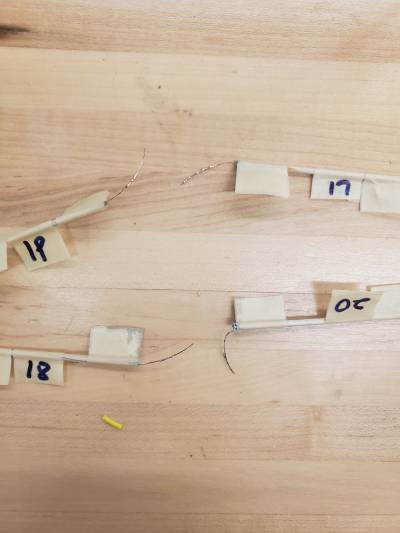
Prepared 2 more wires labeled #21 and #22 for further confirmation.
For wire#21, tried electroplating with step 2, and cleaned it with distilled water after step 2.
For wire#22, tried electroplating with step 2, and did not clean it with distilled water after step 2.
Leave them overnight for soldering next day
| 2020-11-12 | Ruiren temperature at 36.6 C |
|---|
Tried soldering the wires, it was hard to get solder stick on #22, and so far all the wires that cannot have solder stick turns black when I try to heat it before soldering.
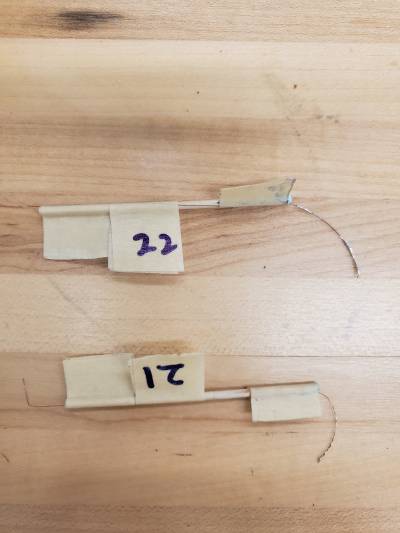
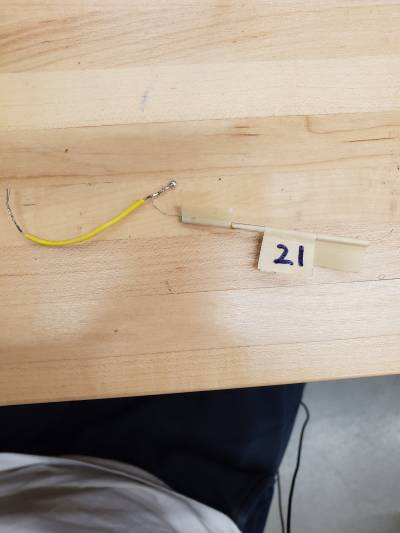
And so the simplest recipe for us is that skip step 1, do step 2, clean wire after with distilled water, leave wire overnight for copper to stick better.
| 2020-12-7 | Ruiren temperature at 36.7 C |
|---|
I had 2 NbTi wire electroplated on 12-6 for the test today. Matt first soldered a NbTi wire with Nick's technique, then we measured the resistence using 4 wire measurement. At room temperature it is 12.6 ohm, at 4K it is fluctuating between 0.04 and 0.06 ohm.
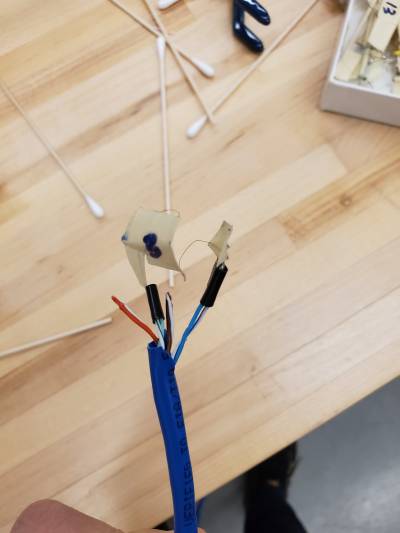
Then I soldered one NbTi with the new method, and soldered 4 wires together as control group.
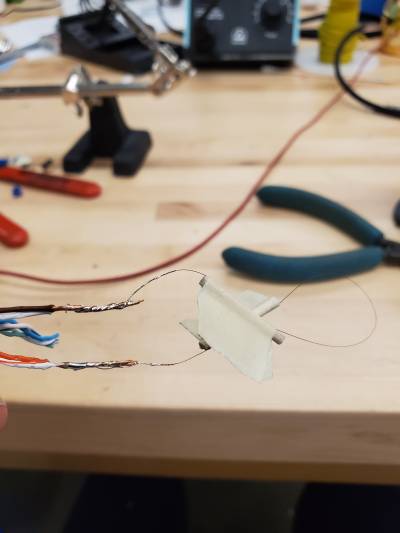
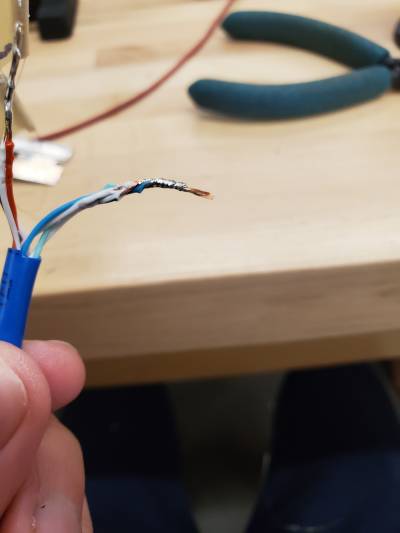
Then I covered all the connections with tape to avoid them from touching each other. Then I measured the resistence.
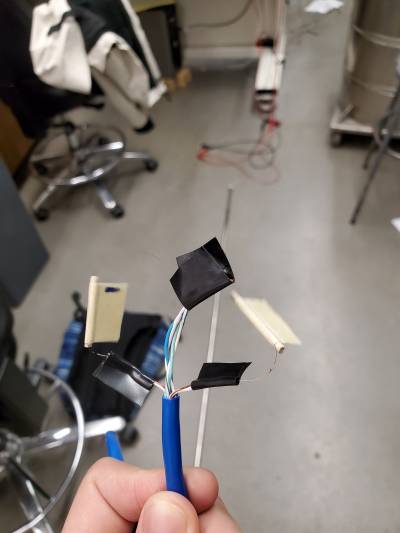
For the control group, the resistence is 0 both at room temperature and at 4K.
For the NbTi, the resistence is 17.6 ohm at room temperature. At 4K, it drops to 0.0001 for about 10 seconds, then stays at about 0.001 ohm.
| 2020-12-15 | Ruiren temperature = 36.6 C |
|---|
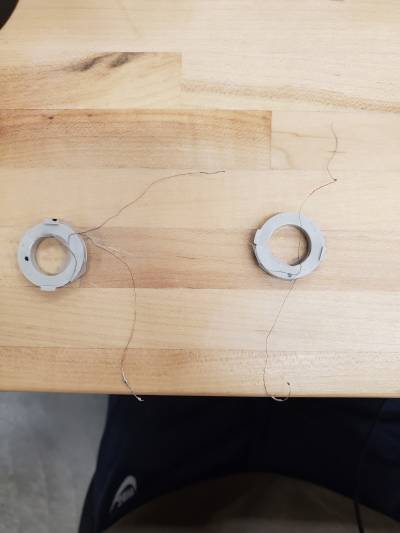
Electroplated one end of the wound NbTi wire. The resistance of both coils is measured to be around 7.5 kOhm before electroplating.
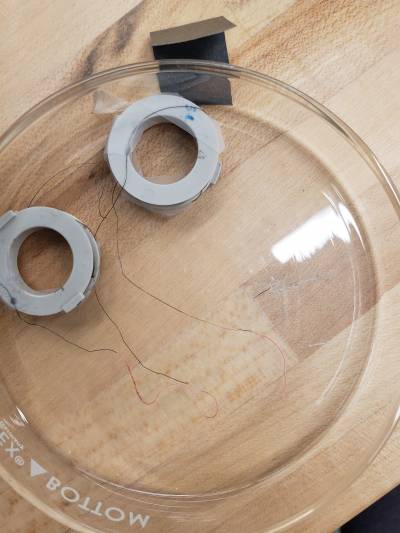
| 2020-12-17 | Ruiren temperature = 36.8 C |
|---|
Pretinned the end with copper layer and electroplated the other end.
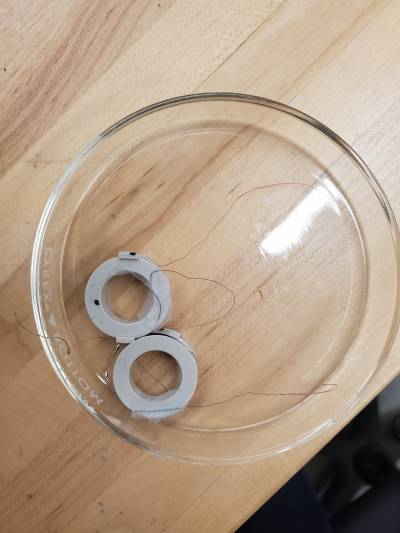
| 2020-12-18 | Ruiren temperature = 36.5 C |
|---|
Pretinned the coils, the resistance of both coils is measured to be around 7.5 kOhm after electroplating and pretinning. The coils are ready to be soldered.